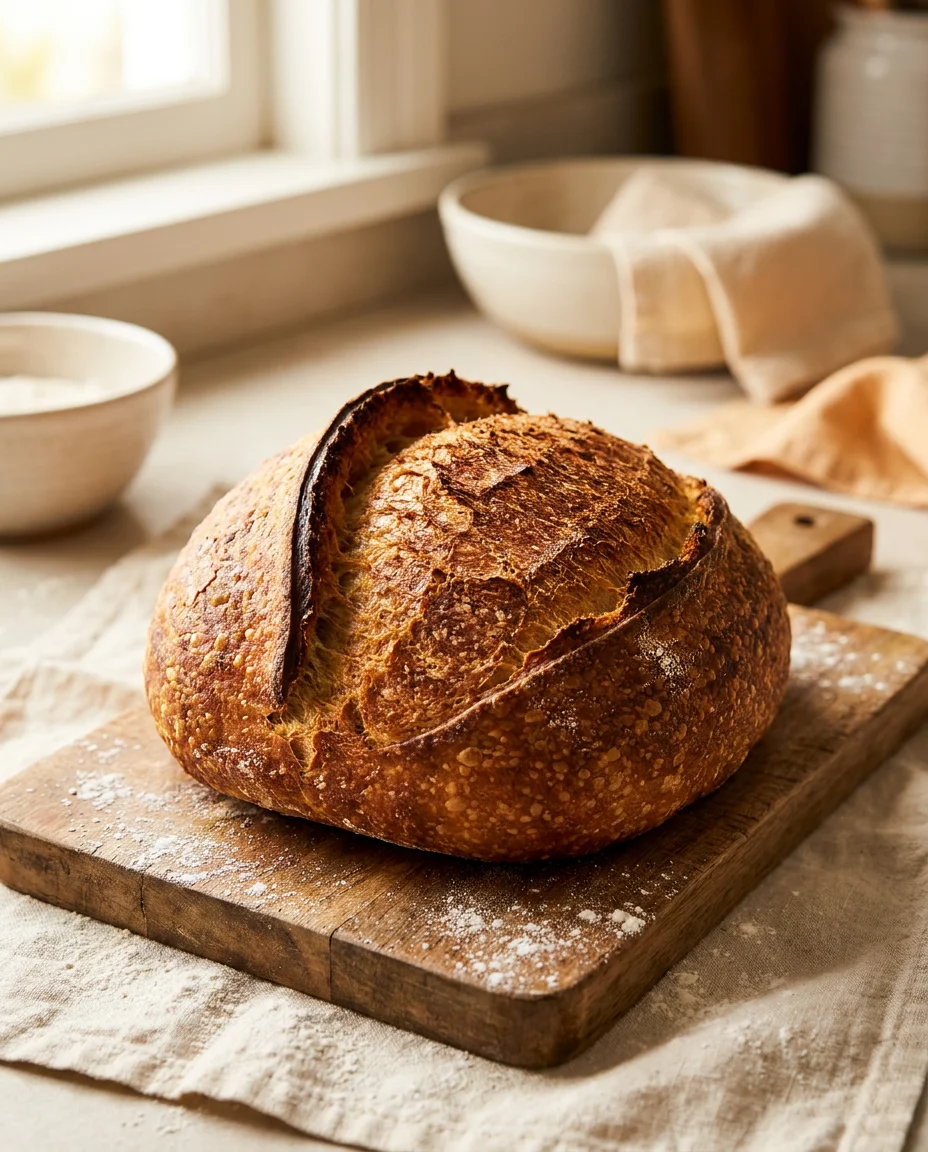
How to Make Sourdough Starter

To make a sourdough starter, mix flour and water, let it sit, then feed it fresh flour and water every day until it bubbles and doubles reliably after a feed. From scratch that usually takes about 5 to 14 days, depending mostly on how warm your kitchen is. It's simple, but it does take patience.
What do you need to make a sourdough starter?
Very little: flour, water, a clean jar, a spoon, and ideally a kitchen scale. Whole wheat flour in the first mix helps wake things up faster, and all-purpose works fine for the feedings after that. Filtered or cool tap water is best.
How do you make a sourdough starter from scratch?
This is a common day-by-day method. It uses equal parts starter, flour, and water by weight (a 1:1:1 ratio), which is the minimum feeding ratio recommended by University of Illinois Extension's Sourdough Bread: 101 guide. It also recommends covering the jar loosely and keeping the starter at about 70 to 82°F while you build it.
- Day 1: Mix 50g whole wheat flour with 50g cool water in a clean jar. Cover loosely and leave it at about 70°F for 24 hours.
- Day 2: Keep 50g of the mixture and discard the rest. Add 50g water and 50g all-purpose flour. Stir and rest 24 hours.
- Day 3 onward: Feed twice a day, about 12 hours apart. Each time, keep 50g of starter, discard the rest, and add 50g water and 50g all-purpose flour.
- Keep going until it reliably doubles after each feeding. If it isn't bubbly by day 5, keep feeding every 12 hours for a few more days.
How long does it really take?
Plan on about a week, and don't be surprised by two. Five days is the best case, and if it isn't vigorous by then, keep feeding. University of Illinois Extension notes that establishing a starter can take 14 days or even longer. Other guides we looked at estimate 7 to 14 days, and one author reported around 10 days in a 68°F kitchen. Warmth is the biggest factor, so a spot around 75°F speeds things up.
How do you know your starter is ready?
- It at least doubles in volume within about 6 to 8 hours of a feeding.
- It's full of bubbles, including small bubbly streaks on the surface.
- It smells pleasantly tangy, not sharp or harsh.
Some bakers also do a float test, dropping a small spoonful into water to see if it floats. Doubling is the more reliable sign.
Is there a faster way to get a starter?
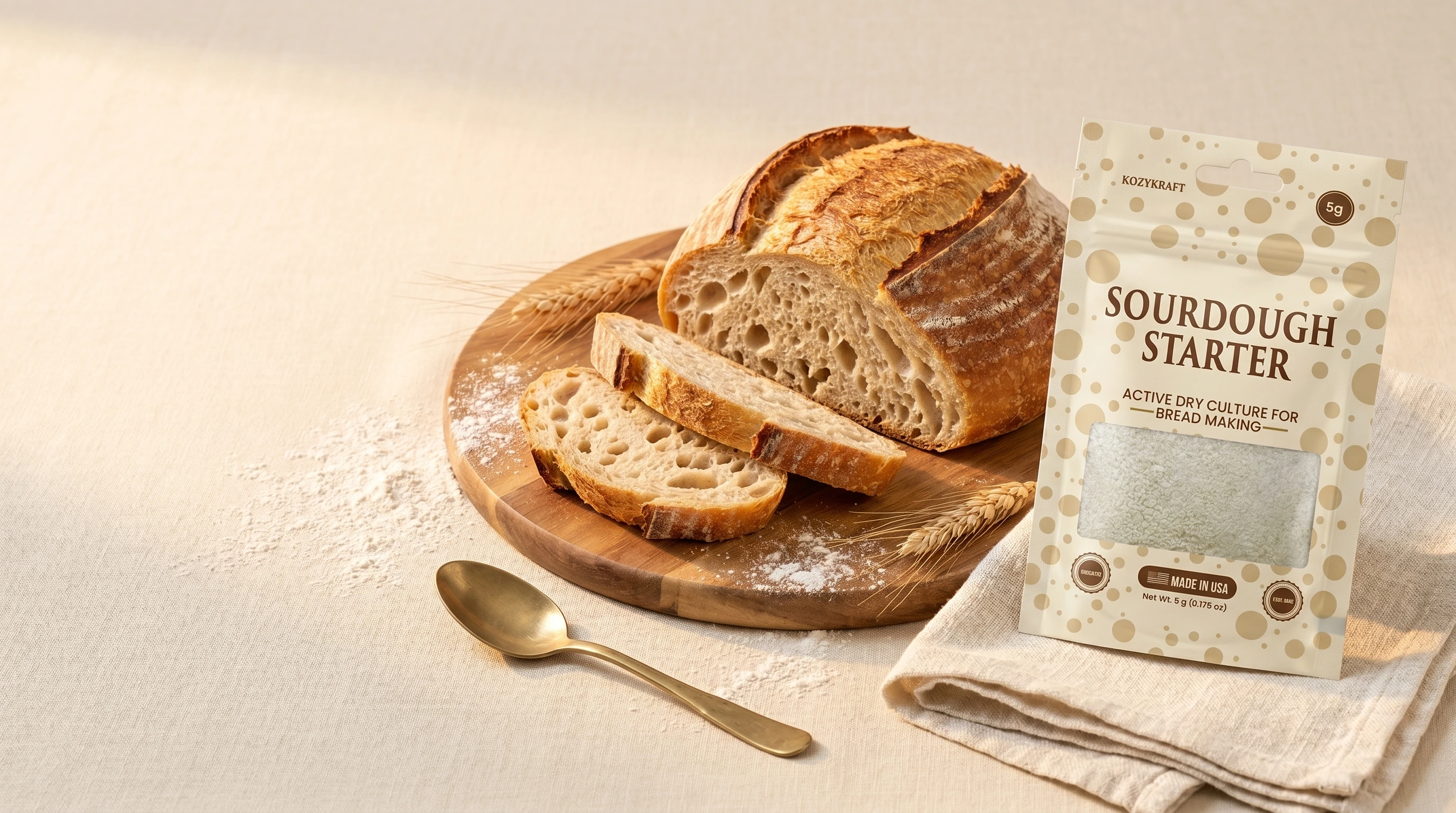
Yes. Our dehydrated sourdough starter skips the slow first stage because the wild yeast is already there, and our live sourdough starter arrives ready to feed. This is a different method from the from-scratch one above. Here are our official directions for the dehydrated starter:
- Day 1: Mix the full packet with 1.5 tbsp filtered water in a clean jar. After 1 hour, add 1 tbsp organic flour. Cover loosely (don't seal). Leave on the counter for 24 hours.
- Day 2: Feed 2 tbsp flour + 1.5 tbsp water. Stir to a thick pancake-batter consistency. Cover loosely. Wait 24 hours.
- Day 3: Repeat Day 2's feeding. Watch for bubbles, because your starter is waking up.
- Day 4: Add ⅓ cup flour + ¼ cup water. Stir smooth. Transfer to a larger jar if needed. Cover and wait 24 hours.
- Day 5: Ready when it doubles after a feed. From here: feed daily on the counter, or weekly in the fridge.
The full tutorial walks through every day with a video.
What if my starter isn't bubbling?
Slow starters are normal, especially in a cool kitchen. Move the jar somewhere warmer, keep feeding on schedule, and give it a few more days. Our troubleshooting page covers the most common problems.
What do you bake first?
Once your starter doubles after a feed, it's ready for bread. Your first loaf is a gentle place to start.